Sliding Driveway Gate Off Its Track: What Went Wrong
A slider does not jump the track without a reason. Finding the reason is the difference between a repair and the same repair again in six months.
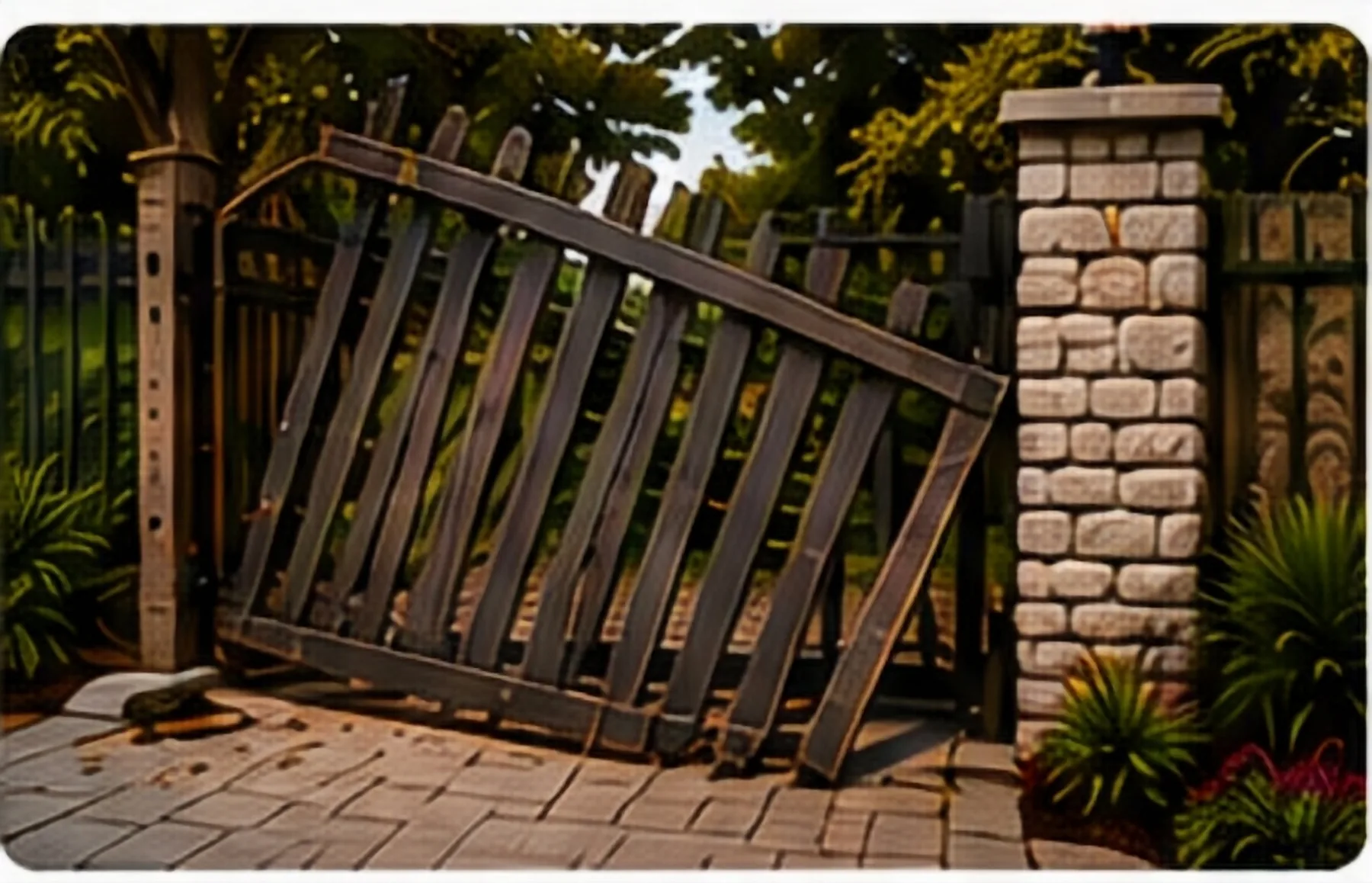
Debris is the usual suspect
Gravel, leaves and the mulch that washes out of a bed after rain all end up in the track. A heavy gate riding over a stone will lift, and once it lifts it can come off.
This is the cheapest cause and the easiest to prevent. A brush along the track once a month costs nothing.
Worn rollers
Rollers are consumable. They flatten, seize and eventually break up, and a gate on failing rollers runs noisy and slow before it runs off.
If your gate has been getting louder over the last few months, it was telling you this was coming.
A footing that settled
Track has to be dead level. If the concrete under one end has dropped even slightly, the gate is fighting a gradient every cycle and the rollers take the punishment.
This is the expensive one, and the reason we look at the whole run rather than just refitting the gate and leaving.
Why it matters that it is diagnosed properly
Lifting a gate back onto its track takes ten minutes. If the cause was a settled footing or a worn roller, it will be off again shortly and the second failure usually damages something.
We check the track, the rollers, the guides and the footings before quoting, because the fix depends entirely on which of those failed.
Cantilever as an alternative
On entrances that collect debris or sit on a slope, a cantilever gate carries on rollers set back along the fence with nothing on the ground at all.
It costs more and needs run-back room, but on a problem entrance it removes the failure mode entirely.
Free written quotes. We come out, look at it properly and tell you what it needs.
See Driveway Gate Repair Glendale