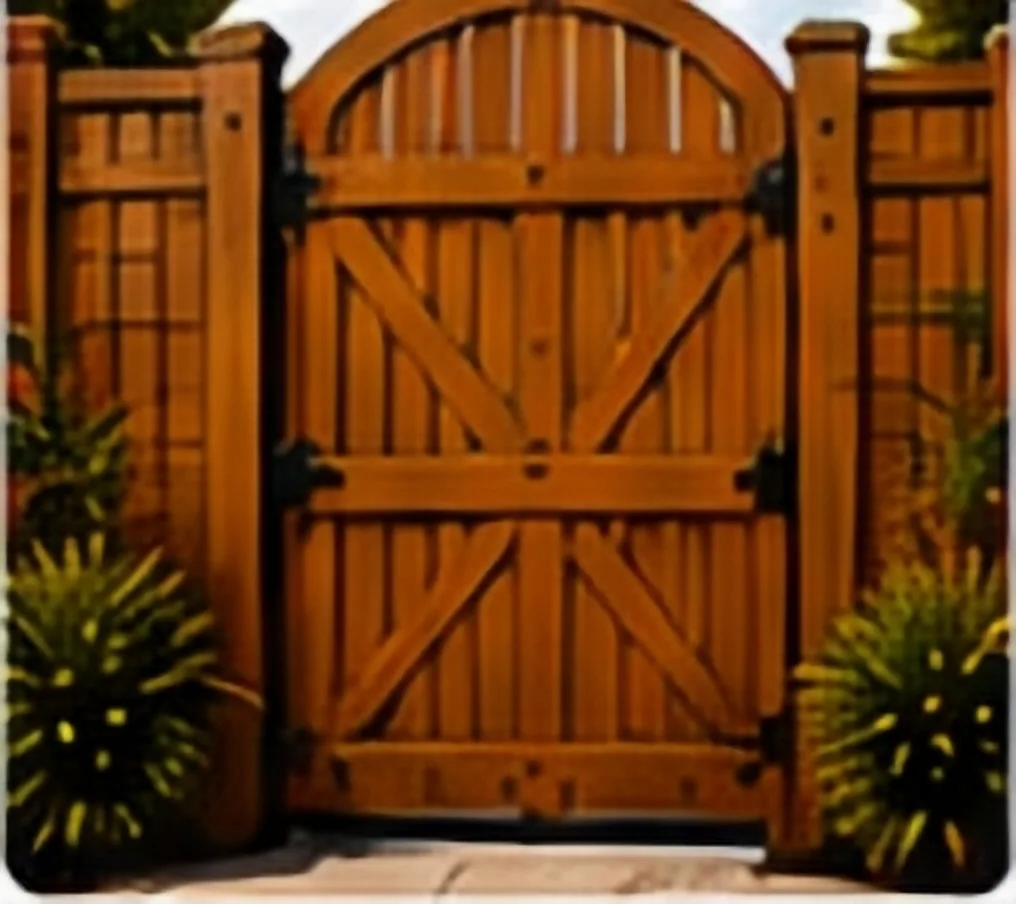
Fence Contractor in Burbank
What to know about fence contractor in Burbank
How long it takes
Most fence jobs are measured in days rather than weeks. What stretches a schedule is removal of what is already there, difficult access, or ground that fights the digger.
A straightforward residential run is usually a day or two on site once materials are in. Posts go in first and the concrete needs time before anything hangs on them, so the work is not continuous.
What Los Angeles County weather does to it
Sun is the quiet killer here. UV breaks the surface down and greys the timber, which is cosmetic at first and structural eventually. Sprinklers are worse: a head throwing onto the boards keeps them permanently damp at the base.
The ground moves through the year. It bakes hard through summer and softens through the winter rains, and a post set shallow will start to lean after the first wet season.
Repair or replace?
We would rather fix what you have than sell you something new. Telling a Burbank customer their fence has years left in it is a shorter conversation, but it is the one that gets us called back.
Replacement makes sense when several posts have gone along the same run, when the frame has racked out of square, or when repeated repairs have already cost more than half the price of new. Short of that, repair almost always wins.
What Fence Contractor Burbank usually involves
Every run is different. We measure the line, check what the ground is like, look at access for materials, and work out whether the existing posts can stay. That last question decides most of the price.
Most jobs start the same way: we walk the line with you, look at what is already there and find out what is actually failing. On a Burbank property that usually means checking the posts before anything else, because a fence almost always gives up at ground level long before the boards do.
Working across Los Angeles County
Most of our work is within a short drive of Burbank — Toluca Lake, Universal City, Cahuenga Pass and the rest of Los Angeles County. We are not sending someone across the county to look at your fence.
We cover Burbank and the surrounding communities including Toluca Lake, Universal City and Cahuenga Pass, so we are rarely far away when something needs looking at quickly.
How we work
You get a straight answer on the day. If the job needs something we cannot do well, we will tell you that too rather than take it on and hope.
We come out and look, we tell you what we found, and you get the price in writing before anything starts. If we think replacement is better value than repair, we say so.
How far in advance do I need to book?
It varies with the season. Wind and rain months are busier because more people are calling about damage. We give you a realistic date rather than an optimistic one.
Can you repair just one section?
Usually, yes. That is one of the advantages of a fence over a panel system — boards, rails and individual posts can be replaced without touching the rest of the run.
Will a new fence match my existing one?
We match material, spacing and finish as closely as we can. New timber next to weathered timber will not be an exact match until it has aged a season, and we will say so up front rather than after.